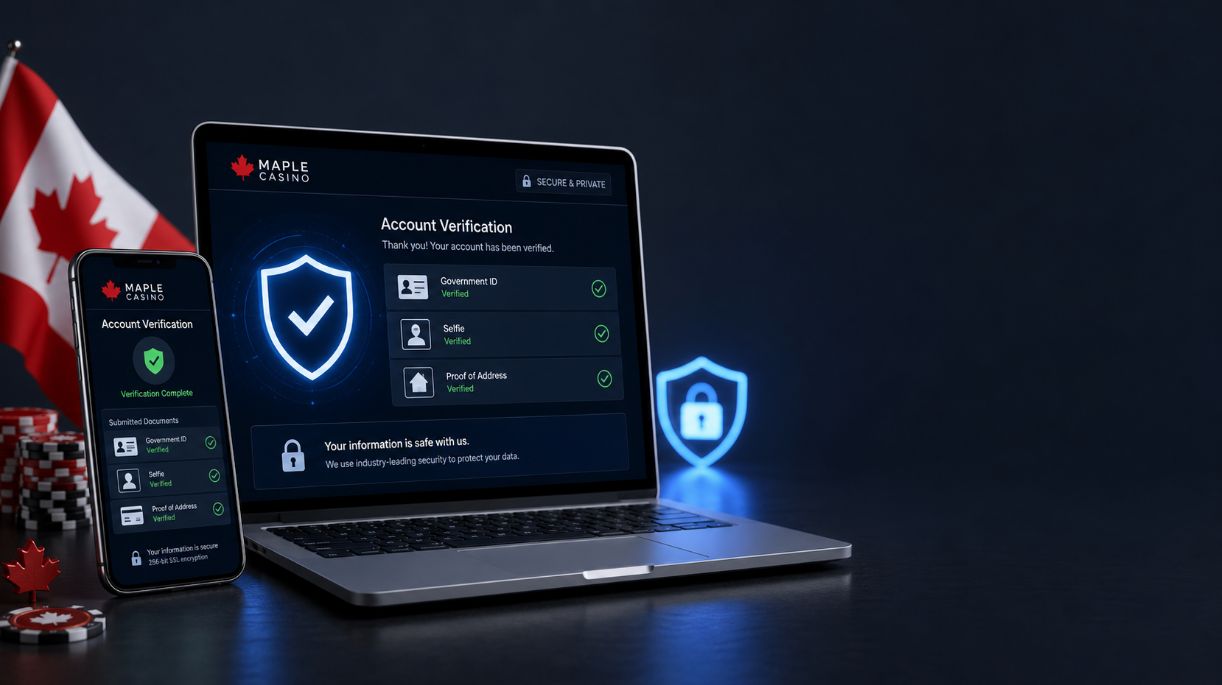
Casino verification and KYC (Know Your Customer) are at the heart of safe, legal, and responsible online gambling—especially for Canadian players. Understanding how verification works, why casinos ask for documents, and what you can do to speed up the process helps you avoid frustration and keep your account secure.
What Is Casino Verification and KYC?
Casino verification is the process an online casino uses to confirm that you are who you say you are, that you are old enough to gamble, and that your money comes from legitimate sources. KYC (Know Your Customer) is the formal framework that guides this process.
In practical terms, KYC means:
-
Confirming your identity (name, date of birth, nationality)
-
Confirming your address (where you live)
-
In some cases, confirming your source of funds (how you finance your gambling)
For Canadian players, verification is not just a casino preference—it is a regulatory requirement in most legitimate jurisdictions. Licensed casinos must follow KYC rules to prevent underage gambling, fraud, and money laundering, and to comply with financial regulations.
Why Online Casinos Need KYC
Many players feel annoyed when asked to upload documents after a big win, but KYC exists to protect both the casino and the player. There are several important reasons for verification.
1. Preventing underage gambling
In Canada, the legal gambling age is typically 18 or 19 depending on the province or territory. Online casinos that accept Canadian players must ensure that minors cannot access real-money games. KYC allows casinos to:
-
Verify the date of birth on your ID
-
Block accounts that belong to underage users
-
Comply with licensing conditions and local laws
Without KYC checks, it would be much easier for minors to gamble using fake details.
2. Fighting fraud and identity theft
Fraudsters sometimes try to open casino accounts with stolen identities or use chargebacks to defraud operators. Verification helps casinos:
-
Confirm that the name on the account matches the name on the payment method
-
Detect multiple accounts opened under the same identity or device
-
Reduce the risk of stolen credit cards being used to deposit
For you as a Canadian player, this adds a layer of protection: it is much harder for someone else to misuse your personal details on a properly regulated site.
3. Anti-money laundering (AML) and source of funds
Casinos handle large volumes of financial transactions, which makes them a target for money laundering. Regulators require operators to monitor deposits, withdrawals, and betting patterns for suspicious activity.
KYC and AML measures help casinos:
-
Track unusually large or frequent transactions
-
Request proof of source of funds for high-volume players
-
Report suspicious behaviour to relevant authorities
If a casino fails to follow these rules, it can face heavy fines or lose its license.
4. Ensuring fair play and a stable environment
By verifying who is playing on their platform, casinos can:
-
Enforce one-account-per-player rules
-
Manage self-exclusion and responsible gambling tools reliably
-
Prevent bonus abuse and collusion
KYC is part of ensuring that the environment is fair, stable, and sustainable for honest Canadian players.
When Casinos Ask for Verification
Many Canadian players are surprised when verification is requested at specific moments. In reality, casinos have fairly predictable triggers for KYC checks.
Common scenarios include:
-
When you first register
Some casinos ask for basic details up front and run automatic checks using databases, especially if they operate in strictly regulated markets. -
Before your first withdrawal
This is the most typical point. The casino allows you to deposit and play, but before sending money out, it must verify your identity and payment method. -
After hitting certain thresholds
If your total deposits, withdrawals, or winnings exceed a set amount, the casino may ask for additional documents, especially proof of income or source of funds. -
If your behaviour changes significantly
For example, suddenly increasing your deposits or betting patterns can trigger a review.
The key point for Canadian players: do not wait until you have a large win to think about KYC. It is often smarter to verify early.
What Documents Do Canadian Players Need?
While exact requirements vary between operators and licensing jurisdictions, most casinos ask Canadian players for similar types of documents.
1. Proof of identity
This confirms your name, date of birth, and photo.
Common accepted documents:
-
Passport
-
Driver’s license
-
Provincial or territorial photo ID card
The document should be valid (not expired), clearly visible, and show all corners. Many casinos accept photographs taken with a smartphone as long as they are sharp and unobstructed.
2. Proof of address
This verifies where you live and is often required to confirm you are playing from an allowed country or region.
Typical proof of address documents:
-
Utility bill (electricity, gas, water, internet)
-
Bank or credit card statement
-
Government-issued letter or tax document
-
Lease agreement or official insurance statement
Normally, the document must:
-
Show your full name and current address
-
Be dated within the last 3 months (sometimes 6)
-
Be a full-page document, not cropped screenshots
3. Proof of payment method
Casinos must ensure that the person requesting withdrawals is the same person who owns the funding method.
Depending on how you deposit, you may be asked for:
-
A photo of your credit/debit card (with some digits covered)
-
A screenshot of your e-wallet account (e.g., showing name and email)
-
A bank statement showing your name and relevant transactions
For Canadians using Interac, e-wallets, or online banking, casinos may request screenshots that match your registered details.
4. Source of funds (for higher volumes)
If you deposit or withdraw larger sums, the casino may need to understand where your money comes from. This is especially relevant for high-rollers or players with consistent high stakes.
Examples of source-of-funds documents:
-
Payslips or employment income statements
-
Business accounts or company dividends statements
-
Savings account statements
-
Documentation of inheritance or property sale
Not every player will be asked for this level of detail, but it is part of stricter AML requirements.
Step-by-Step: How Casino Verification Usually Works
From a Canadian player’s perspective, the verification process generally follows a clear series of steps.
Step 1: Register and provide basic details
When you create your account, you typically enter:
-
Full legal name
-
Date of birth
-
Address and country of residence
-
Email address and phone number
Ensure these details match your actual documents. Fake details only cause trouble later when you need to verify.
Step 2: Access the verification or account section
Most casinos have:
-
A “Verify Account” or “KYC” section
-
A document upload page in the profile area
-
A prompt that appears when you request your first withdrawal
There you will see the list of required documents and upload instructions.
Step 3: Upload clear copies
Use a high-quality camera or scanner and follow these tips:
-
Place the document on a flat surface in good light
-
Make sure all corners and edges are visible
-
Avoid glare, flash reflections, or heavy shadows
-
Do not crop out important details like the document number or expiry date
If it is a multi-page statement, upload the full page showing your name, address, and date.
Step 4: Wait for manual or automated review
Once uploaded:
-
Some casinos use automated systems that can approve documents quickly.
-
Others rely on a KYC team to review each file manually.
Verification may take anywhere from a few minutes to 24–72 hours, depending on the operator’s workload and any issues with your documents.
Step 5: Respond to any additional requests
If something is unclear, the casino might:
-
Ask for a clearer copy
-
Request an alternative document (e.g., one with a more recent date)
-
Ask for additional proof, such as a selfie holding your ID
Respond promptly and politely; this speeds up the resolution.
Step 6: Enjoy smoother withdrawals in future
Once your account is fully verified, future withdrawals usually process faster because the casino no longer needs to ask for basic KYC documents again, unless your situation changes.
Common Verification Problems and How to Avoid Them
Many frustrations come from avoidable mistakes. Being prepared helps Canadian players get verified without complications.
Mismatched personal details
If the name or address on your documents does not match what you entered during registration, the casino will likely flag your account.
Avoid this by:
-
Using your legal name, not nicknames
-
Keeping address information up to date
-
Contacting support to correct any typos early
Blurry or incomplete images
Documents that are hard to read or partially cropped are a major cause of delays.
Best practices:
-
Use good lighting and a steady hand
-
Check the preview before uploading
-
Make sure the entire document is visible
Expired or outdated documents
If your ID is expired, or your proof of address is too old, the casino may reject them.
Ensure that:
-
Your ID document is valid and in-date
-
Your proof of address is recent enough according to the casino’s guidelines
Ignoring verification until cash-out time
Many players wait until they have a big win before thinking about KYC. Then they discover they cannot withdraw until verification is complete.
A smarter approach for Canadian players:
-
Upload your documents soon after registering
-
Aim to be fully verified before making large deposits or chasing high payouts
KYC and Privacy: How Secure Is Your Data?
Sharing sensitive documents online understandably raises privacy concerns. Reputable casinos handle this by using strict security measures.
Typical protections include:
-
Encrypted data transmission (HTTPS)
-
Secure servers in regulated jurisdictions
-
Limited internal access to KYC documents (only compliance staff)
-
Retention and deletion policies that follow legal requirements
As a player, you can protect yourself by:
-
Choosing licensed and well-regarded casinos
-
Avoiding sending documents through unsecured email if an encrypted upload portal is available
-
Checking the operator’s privacy policy for details on data handling
Unlicensed or untransparent sites are more likely to mishandle data, which is another reason to stick with regulated operators.
Differences Between Licensed and Unlicensed Operators
Not all casinos treat verification the same way. For Canadian players who use offshore sites, this is an important distinction.
Licensed casinos
Licensed operators:
-
Follow KYC and AML regulations as part of their license conditions
-
Use standardized, transparent verification procedures
-
Have independent oversight and can be audited or sanctioned
While this sometimes means stricter checks, it also means more security, clearer dispute paths, and a higher level of trust.
Unlicensed or lightly regulated casinos
Unlicensed or poorly regulated sites may:
-
Delay or manipulate verification to avoid paying withdrawals
-
Ask for unusual or excessive documents without clear justification
-
Offer little recourse if they refuse your cash-out
If a casino consistently uses verification as an excuse not to pay, that is a red flag. It is usually safer for Canadian players to avoid such sites altogether.
How KYC Relates to Responsible Gambling Tools
Verification is closely linked with responsible gambling measures. Once your identity is confirmed, the casino can:
-
Enforce self-exclusion across all your accounts with that operator
-
Apply deposit limits, loss limits, and session limits accurately
-
Prevent you from re-registering under a different name to bypass limits
For Canadian players who value control and safety, this is a major benefit of robust KYC systems.
Tips for Canadian Players to Make KYC Easy
A little preparation goes a long way. You can simplify the verification process by following a few practical steps.
-
Keep digital copies ready
Store clear photos or scans of your ID and a recent proof of address in a secure folder so you can upload them quickly when needed. -
Register with accurate information
Double-check spelling and numbers when you sign up. Consistency between your account details and documents avoids complications. -
Verify early
If you like a casino and plan to play regularly, complete verification as soon as possible instead of waiting until you hit a big win. -
Use stable, mainstream payment methods
Depositing via well-known methods such as cards, Interac, e-wallets, or reputable payment services makes proof of payment easier. -
Communicate with support
If you are unsure which documents to provide, ask customer support for guidance before uploading.
Final Thoughts: KYC as a Sign of a Serious Casino
For many Canadian players, casino verification can feel like an obstacle between them and their winnings. In reality, KYC is one of the strongest signals that a casino is serious about security, regulation, and fairness.
When a casino:
-
Clearly explains its verification requirements
-
Provides a secure upload portal for documents
-
Processes KYC in a reasonable timeframe
-
Treats player data with respect and confidentiality
you can feel more confident that your funds and personal information are in safer hands.
Instead of seeing KYC as a nuisance, it helps to view it as part of the cost of playing in a regulated, professional environment. By understanding how casino verification works and preparing your documents in advance, you can enjoy smoother withdrawals, better protection, and a more secure online gambling experience as a Canadian player.